
In this extensive article, we delve deep into the topic of "scratches on your panel? here's how to fix them." We share practical knowledge, concrete tips, and honest considerations, so you can confidently make a choice for your interior. Whether you're just exploring options or ready for the next step, you'll find everything you need here to be well-prepared.
Why choose aluminium dibond?
Ease of maintenance is one of the strongest arguments for wall panels and therefore deserves some explanation. The closed surface hardly allows dirt, grease, and limescale to adhere, so regular light cleaning is sufficient. A damp microfiber cloth and possibly a mild cleaning agent keep the wall fresh; aggressive scouring agents and hard sponges are best avoided. This simple routine keeps the protective layer intact and maintains the panel's color and shine. This saves you the recurring scrubbing often unavoidable with grout and porous materials.
The main advantages at a glance
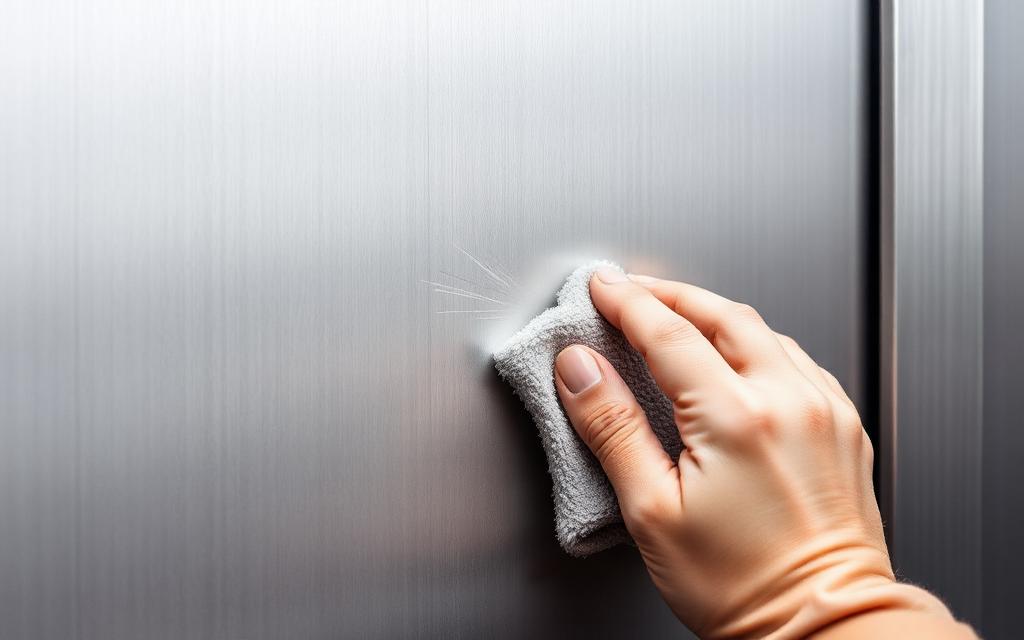
Should a scratch or damage unexpectedly occur, it can usually be treated effectively. Light scratches are barely noticeable on a matte surface and can sometimes be touched up with a suitable product. For deeper damage, replacing a single panel is generally easier and cheaper than you might think, precisely because no complex demolition or grouting work is involved. If you're unsure about the best approach in your case, ask for advice so you can restore the wall to top condition with the right method.
Maintenance and hygiene
Maintenance of wall panels is minimal, which is exactly what many people hope for. A microfiber cloth with some lukewarm water and possibly a mild, non-abrasive cleaning agent is sufficient in most cases. Avoid aggressive scouring agents and steel wool, as these can damage the protective layer over time. By occasionally wiping it down, the surface remains hygienic and shiny. Especially in damp areas, this ease is a relief compared to scrubbing grout between tiles.
Assembly and placement
When determining the budget, it's wise to look at the total costs instead of just the price per square meter. Tiles may seem cheaper at first glance, but then there are the costs of tile adhesive, grout, a tiler, and several days of work. With wall panels, you pay for the panel itself and possibly the installation, but you save on labor hours and additional materials. Therefore, always calculate the complete picture before making a choice; often, the comparison turns out more favorably than expected.
Costs and budget
Good preparation largely determines the final result. Measure the space accurately, take into account sockets, pipes, and cutouts, and consider beforehand how the panels will best come into their own. If necessary, make a simple sketch with the dimensions. The clearer your plan, the smoother the execution will be and the less chance of surprises. If you're unsure about the measurements or layout, feel free to ask for advice; a small investment in preparation prevents major mistakes later in the process.
Design and appearance
The appearance of a room completely changes with the right wall finish. A continuous panel without interruptions creates tranquility and makes a space optically larger and more modern. Light shades reflect light and create an open feeling, while deep, dark colors add atmosphere and character. By consciously choosing between a matte or glossy surface, you further refine the end result. This way, the wall is no longer just a background, but a consciously chosen part of your interior design.
Sustainability and lifespan
Safety and hygiene are important arguments, especially in areas where water and food play a role. The smooth, closed surface of aluminium dibond offers little grip for bacteria and fungi, making it easy to keep clean and fresh. There are no porous joints where dirt accumulates, and the panels are resistant to moisture and splashes. For families, people with allergies, or anyone who values a clean living environment, this is a reassuring feature that is noticeable daily.
Common mistakes
Many people wonder if the panels will eventually become boring or go out of style. By choosing a timeless design, such as a natural stone or wood look or a neutral color, the result remains current for years. If you want something bold, you can cleverly limit it to one accent wall, so that any change in taste can be easily accommodated later. This way, you combine a contemporary look with the certainty that your wall will still suit you in five or ten years.
Practical tips for your project
The printing process deserves extra attention, because the quality of the image determines the ultimate experience. High resolution ensures sharp details and soft color transitions, even on large formats. Therefore, it is important to provide image material that is large and sharp enough. If you provide your own design or photo, check the file size and resolution beforehand. If in doubt, we are happy to check with you whether an image is suitable, so that you are not faced with surprises once the panel has been printed and delivered.
Specific to this space
Aluminium dibond is a composite material consisting of two thin aluminum plates with a plastic core in between. This construction makes the panel both light and exceptionally rigid, so it does not warp or expand with changing temperatures and humidity. Especially in a space where the climate is constantly changing, this is a great advantage. The material has been used for years in the signage and facade industry, precisely because it is so reliable and durable. Indoors, this translates into a wall that still looks sleek and new after many years, without sacrificing appearance.
Why choose aluminium dibond?
The greatest practical advantage of wall panels is the absence of grout lines. Grout lines are the weak point of traditional tiles: they get dirty, discolor, crumble over time, and provide an ideal breeding ground for mold and bacteria. A seamless panel simply does not have this problem. You wipe the surface clean with a damp cloth and it looks like new again. For those who have little time or inclination for cleaning, this is often decisive when choosing wall panels instead of tiles.
The main advantages at a glance
In terms of installation, wall panels distinguish themselves by their speed and lack of mess. Tiling means demolition, dust, mortar, drying time, and usually a craftsman who visits for several days. Panels, on the other hand, are often placed directly on the existing substrate or even over old tiles, using suitable mounting adhesive. As a result, a room is often ready within a day and can be used immediately. This not only saves time but also the inconvenience of a long renovation in your home.
Maintenance and hygiene
An often underestimated advantage is the freedom in design. While with tiles you are bound by standard sizes and existing collections, with aluminium dibond you can have almost any image printed. Think of a marble look, a concrete look, a calm solid color, or even your own photo in a large format. The image is printed sharply and precisely on the panel and then finished with a protective layer. This way, you create a unique wall that perfectly matches the rest of your interior and is unlike anyone else's.
Assembly and placement
Sustainability plays an increasingly important role for many people when making renovation choices. Aluminum is one of the most recyclable materials in the world and, if properly treated, lasts for decades. Because you can often place panels over an existing substrate, little or nothing needs to be demolished and removed. Less demolition waste, less transport, and a long lifespan make it a responsible choice. Anyone considering the ecological footprint of a renovation would do well to take this aspect into account.
Want to get started yourself or need personal advice? Explore the possibilities and take the next step today. Contact us.